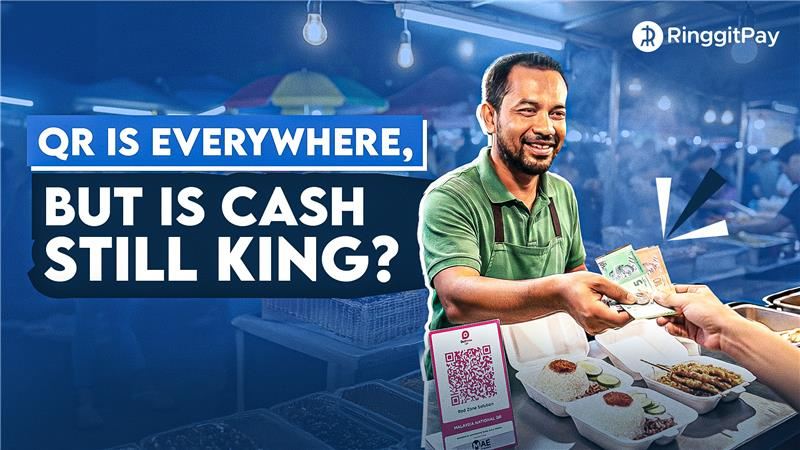
Walk into any Malaysian pasar malam or gerai tepi jalan and you’ll see the familiar DuitNow QR stickers at every counter. Yet when it’s time to pay, the cashier often says, “Cash boleh, dik?”
Most traders know how to use QR. The real reason they still prefer cash is simple: it feels more boleh percaya.
Even with more than 2.6 million DuitNow QR acceptance points nationwide and years of digitalisation efforts, cash is still the go-to for many small retailers. SME Corp’s 2025 SME Digitalisation Survey found that a large number of micro and small businesses still handle their daily operations in cash.
So why does cash continue to rule in a country that is already digital-ready?
The Digital Rails Are Ready, But Habits Take Time
Malaysia has one of Southeast Asia’s most advanced payment ecosystems. As of 2024, 64% of Malaysians used eWallets, and millions of merchants accepted DuitNow QR.
Still, many small traders stick to what feels safe. Moving from cash to QR is not just about knowing how to scan or use an app. It is about trust, confidence, and habit.
For Micro-SMEs, Cash Flow Means Survival
From nasi lemak stalls to kedai runcit and barbershops, small traders live on fast, frequent transactions. Every ringgit matters.
Cash gives them immediate access to money. No waiting for settlements, no uncertainty. It is quick, simple, and tangible.
For many, the feel of cash at the end of the day is more than convenience. It is comfort.
When daily income decides tomorrow’s stock or supplier payment, predictability becomes everything.
Why Cash Still Feels Safer
QR payments are easy to use, but cash still wins the hearts of many small business owners for several reasons.
Cash feels predictable
Money in hand means instant access and zero uncertainty. There are no delays, no reversals, and no system problems. Knowing exactly what you have is more important than convenience.
Digital can feel expensive
Even small fees or waiting for transfers can feel heavy when profits are tight. A hawker earning RM100 a day might see a few ringgit in charges or waiting time as a direct loss.
Visibility can be worrying
Every transaction is traceable. Some merchants worry this might reduce privacy or attract more oversight, especially when they are used to handling cash informally.
Familiarity builds trust
Generational businesses have used cash for decades. For them, cash is not just a way to trade but a symbol of control. Digital payments can feel unfamiliar and dependent on outside systems.
In short, merchants stick to cash because it gives them control, liquidity, and a sense of security.
Building Trust in a Cash-Heavy World
Even with all the QR infrastructure in place, the bigger challenge is getting merchants to trust digital payments. For Malaysia’s cash-heavy small businesses, four ways can make the shift smoother:
Be Clear and Transparent
Explain fees, when money arrives, and how issues are handled. When merchants know exactly what to expect, digital payments start to feel like a helpful tool rather than a risk.
Offer Real Value
Cashback for customers is common, but small businesses need incentives that actually help their daily operations. Faster transfers, lower transaction costs, or rewards for frequent use can make digital payments feel like a financial boost rather than an extra expense.
Use Peer Influence
Small businesses often watch what other merchants are doing. Seeing the stall next door receive payments smoothly can be more convincing than any advertisement.
Show How It Helps Day-to-Day
Most merchants know how to receive QR payments. What they may not see clearly is how it helps them run their business: tracking sales without mistakes, reducing cash handling, and serving more customers who prefer digital.
Digital readiness does not mean digital trust.
The goal is not to force merchants to go digital. It is to make it feel as safe, simple, and familiar as handling cash.
The Road Ahead for Malaysia’s Cash-to-Digital Transition
Malaysia’s digital payment story is often told through QR codes, eWallets, and real-time transfers. The real challenge is whether these tools can win over the smallest and most traditional merchants.
For policymakers, this means making rules that protect without making life harder. For fintechs and banks, it means building products that solve everyday problems like cash flow and affordability. For merchants, it is about realizing that staying cash-only can cost more in missed sales and extra effort.
The shift will not happen overnight. Cash will still feel familiar for years. Digital payments will only become the default if they feel like gaining control, not losing it.
RinggitPay’s Perspective
At RinggitPay, we believe Malaysia’s digital payment story is about moving forward together. From hawkers to homepreneurs, every transaction should be simple, fast, and trusted.
Fast settlements mean traders can restock without waiting. Clear fees mean no surprises. Easy integrations mean one system that works as hard as they do.
Malaysia’s digital future will not be built by replacing cash overnight. It will be built by earning confidence one transaction at a time.
Ready to Talk Payments?
Digital adoption is not just about technology. It is about people, trust, and making everyday business easier.