Introduction
A customer scans a DuitNow QR code or clicks “Pay Now.” The payment doesn’t go through, but the customer insists they’ve already been charged. Now, your team has to figure out what happened, where the money went and who to contact.
For businesses, payment issues like these are more than just technical inconveniences. They can delay sales, frustrate customers and take valuable time away from daily operations. And while customers expect instant payments, they also expect businesses to have answers when something goes wrong.
This becomes increasingly important as Malaysia moves towards a more digital economy. In 2025, PayNet processed 8.44 billion payment transactions, while DuitNow QR surpassed three million registered touchpoints nationwide. As digital payments become more common, businesses need more than a gateway that processes transactions quickly. They need reliable security, clear transaction records and responsive support when issues arise.
So, when choosing a payment gateway, the question isn’t just how quickly it processes payments, but how well it supports your business when things don’t go as planned.
Keeping Payments Safe and Convenient
When customers make a payment, they expect it to be both safe and successful. For your business, this means choosing a payment gateway with the right security measures to protect payment information and reduce fraud risks. Depending on the payment methods offered, these may include data encryption, fraud monitoring and other safeguards. For example, fraud monitoring can help you identify suspicious transactions and take action when needed.
It is also important to check how the gateway handles failed or duplicate payments. Clear transaction records make it easier for your team to investigate issues, confirm what happened and respond to customers without having to search through multiple records.
Payment options matter too. In Malaysia, your customers may prefer FPX online banking, DuitNow QR, cards or e-wallets depending on how they shop. Offering these payment options gives your customers more flexibility and can help reduce abandoned purchases.
RinggitPay supports FPX, Visa/Mastercard and key local payment channels. Its merchant dashboard helps you track transactions and identify payment issues more easily. When comparing gateways, consider whether the available payment methods suit your customers and how easily you can access transaction records when issues arise.
What Happens When Things Break, and How Smart Operations Help Your Cash Flow
Even with a reliable payment gateway, problems can still happen. Your customers may need help completing a purchase or resolving payment issues.
Responsive support makes a difference when payment issues affect your business. Check whether your payment gateway provides a clear way to contact its support team when you need assistance. RinggitPay offers merchant support to help you resolve payment issues when they arise.
The way you collect payments also affects your cash flow. If you regularly remind customers to pay invoices, collect recurring fees or follow up on overdue payments, handling everything manually can take up valuable time.
Making Payment Integration Easier
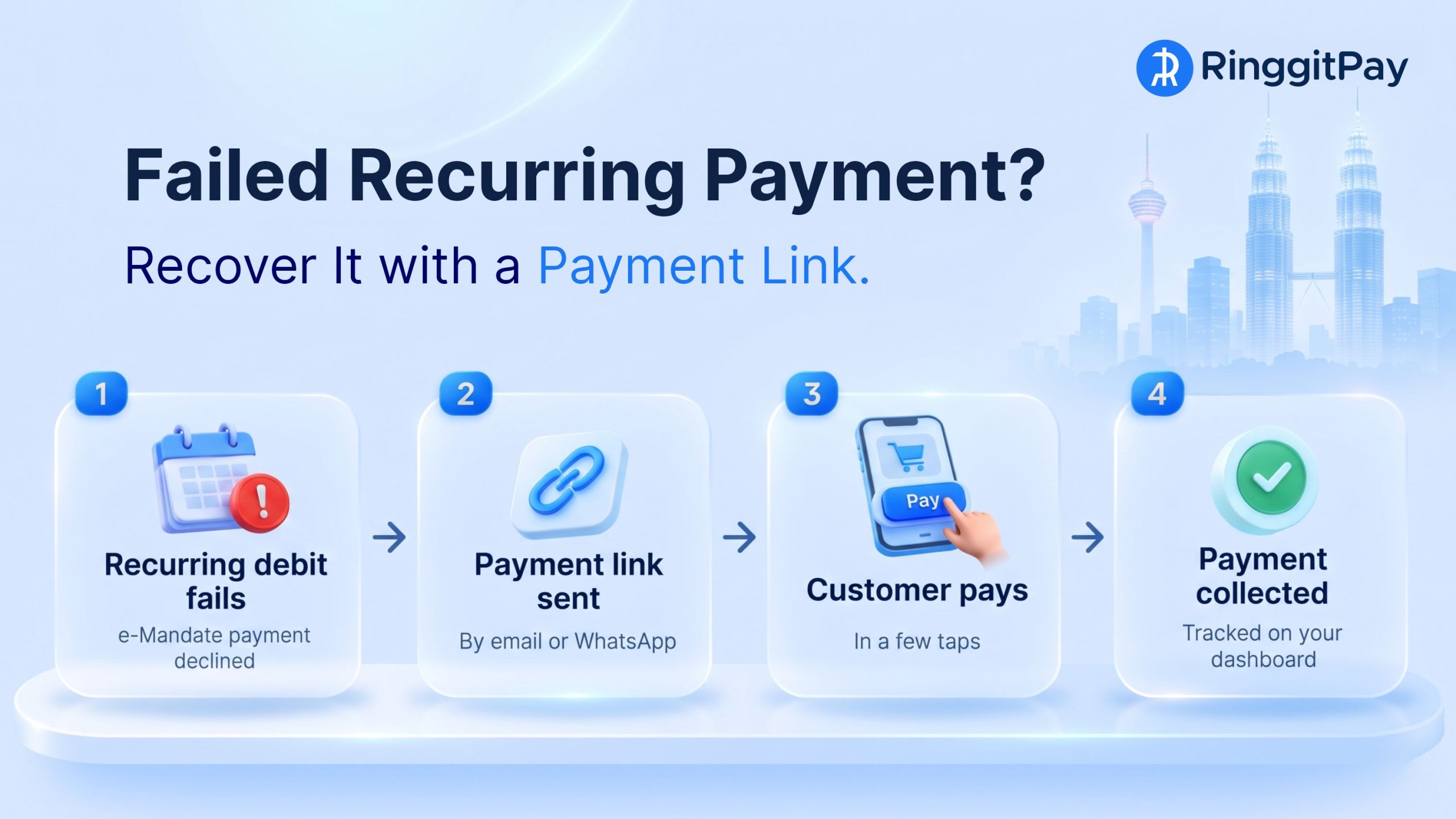
Tools such as payment links give your customers a straightforward way to pay through email or WhatsApp. This is particularly useful when you need to collect outstanding invoice payments without putting customers through a lengthy payment process.
If your business collects recurring payments, features such as e-Mandate and automated collections can help reduce repeated manual follow-ups. RinggitPay offers payment links and e-Mandate options to simplify your collection process. If a recurring debit fails, you can use a payment link and reminder to help your customer complete the payment.
Choosing a Payment Gateway You Can Rely On
Before making a decision, consider the following:
- Security: What measures are in place to protect your customers’ payment information?
- Payment options: Can your customers pay using their preferred methods?
- Collection tools: Do you have access to payment reminders, recurring payments or payment links?
- Fees: Are the transaction fees and other charges clearly explained?
- Settlement: How long does it take for payments to reach your bank account?
- Support: If a payment fails or is delayed, who can you contact for assistance?
Understanding these factors can help you choose a payment gateway that suits your business needs and supports your cash flow.
Take a moment to review your current payment setup. If managing collections requires too much manual work or resolving payment issues takes longer than it should, it may be time to consider a better solution.
A reliable payment gateway should make your day-to-day operations easier, not add more work. From tracking transactions to resolving payment issues, having the right provider can save your team time and help keep your business running smoothly.
Conclusion
As digital payments become part of everyday business, customers expect transactions to be quick and hassle-free. But when a payment fails, they will turn to your business for answers, regardless of where the issue started.
That’s why choosing the right payment gateway is a decision worth taking seriously. The real test of a provider isn’t only how well it handles successful transactions, but how it responds when things don’t go as planned.
Frequently Asked Questions (FAQs)
Related Posts