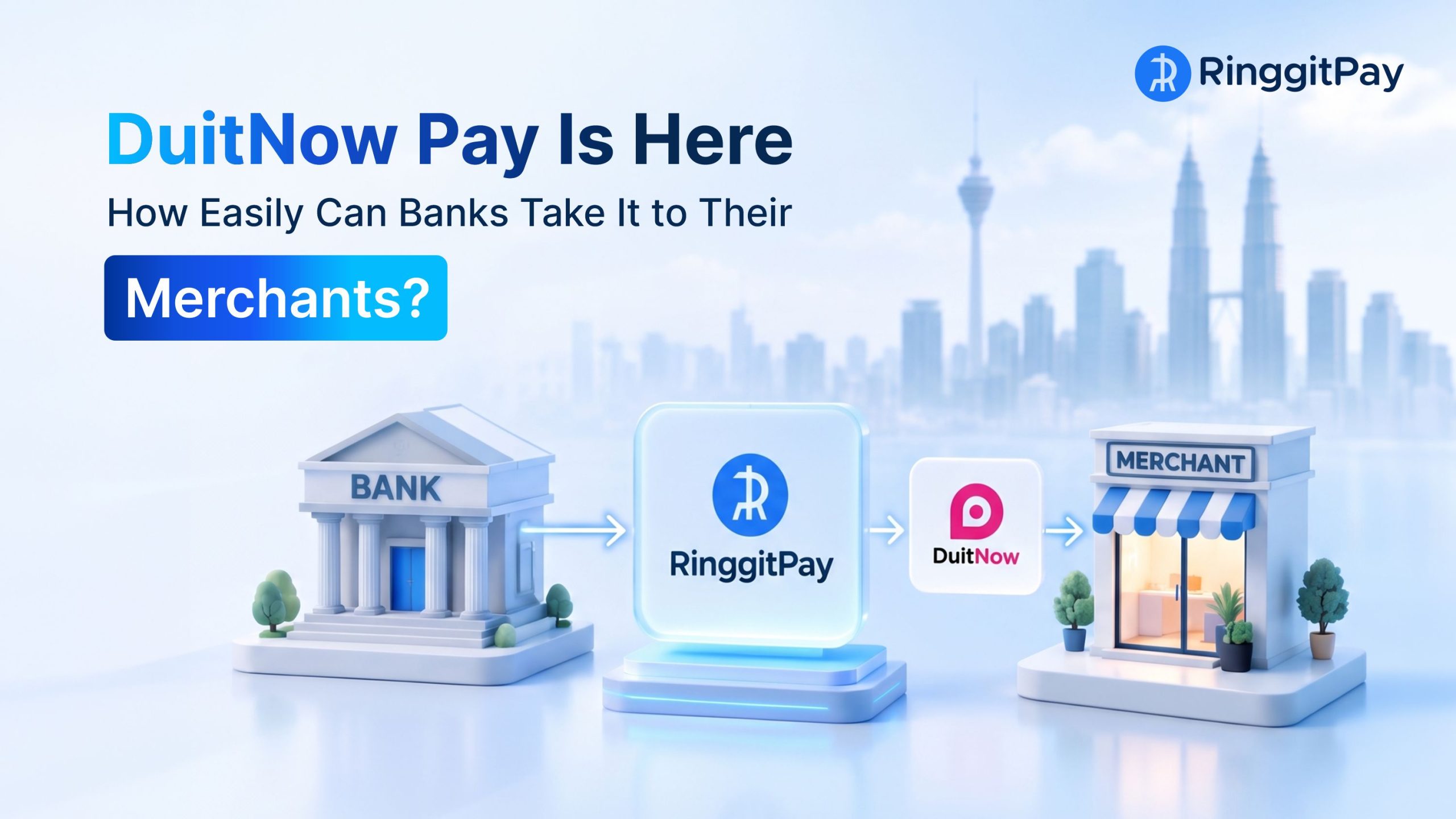
Malaysia’s payment ecosystem is becoming more connected.
With DuitNow Pay, banks have another opportunity to offer their merchants a broader range of digital payment capabilities through a connected payment ecosystem.
But for banks, enabling a new payment capability is only one part of the journey.
The bigger question is:
How easily can this capability reach the merchant?
From Bank Capability to Merchant Adoption
For a payment capability to create real business value, merchants need to be able to integrate, configure and start using it without unnecessary complexity.
That means connecting multiple systems, managing payment flows, supporting different integration models, handling transaction responses and giving merchants visibility over their transactions.
This is where the technology layer matters.
RinggitPay is built to simplify that layer.
As a merchant acquiring platform provider, RinggitPay connects merchants to the payment ecosystem while helping banks take payment capabilities such as DuitNow Pay to their merchant base.
What happens behind the checkout?
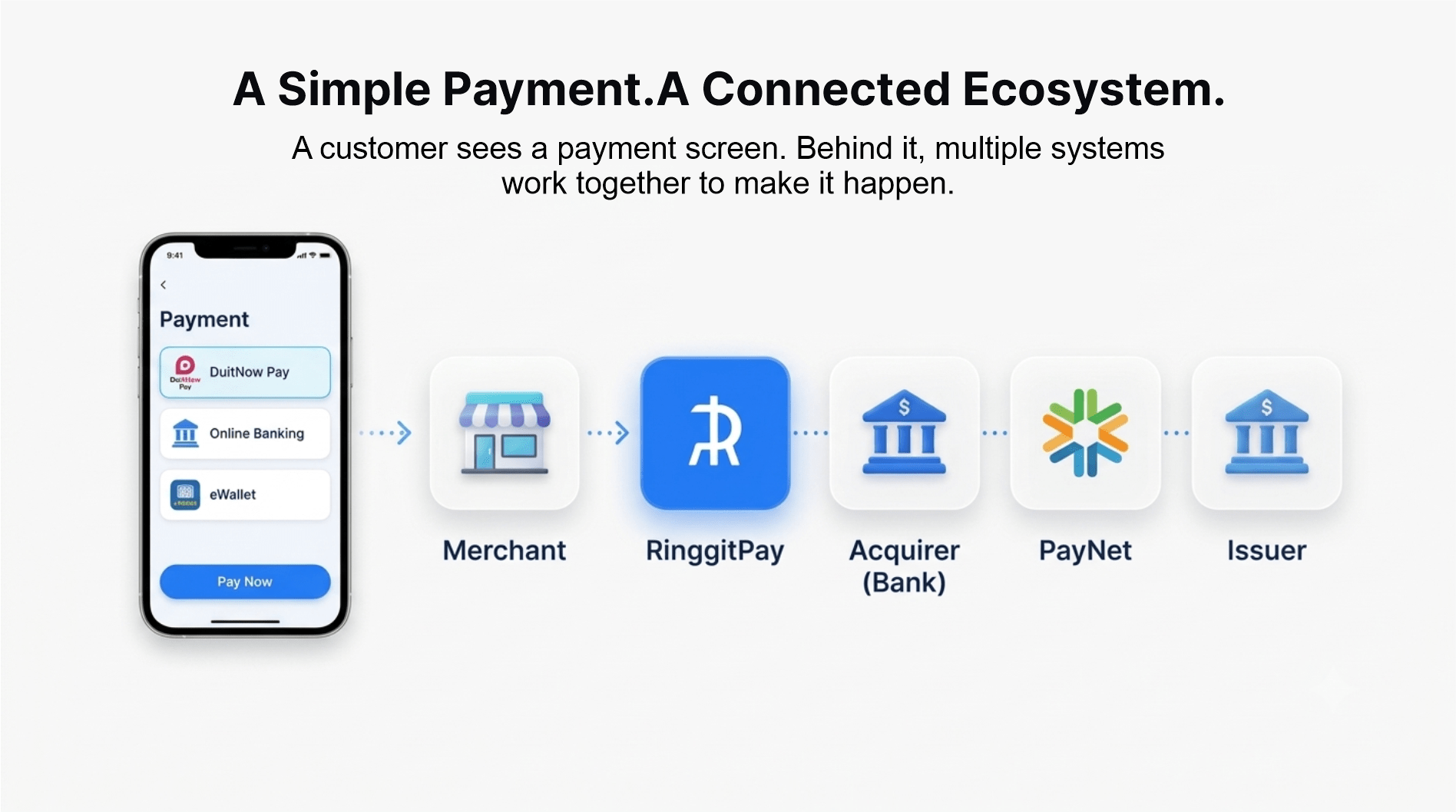
A customer sees a payment screen.
Behind it, there can be multiple systems involved:
or banks, making this journey work reliably means more than simply connecting to a payment rail.
It requires the right integration, orchestration and testing across the ecosystem.
RinggitPay provides the layer that helps bring these pieces together.
The objective is simple:
Give merchants flexibility without making banks build every layer themselves.
Making Payment Integration Easier
RinggitPay also supports the operational side of merchant payments.
Merchants can access transaction reports, manage payment links and handle eConsent and Auto Debit-related workflows through the Merchant Portal.
This means banks can provide their merchants with more than just another payment option.
They can provide a more complete payment experience.
And Then There Is the Testing
Before a payment capability reaches customers, the payment flow needs to work across the ecosystem.
For DuitNow Pay, this includes System Verification – PayNet’s end-to-end testing process that validates transaction flows across the issuer, PayNet payment switch and acquirer.
It is where integration, message flows, processing and error scenarios are tested before moving towards production.
For banks, this is an important part of turning a payment capability into something merchants can actually use.
Because being connected is not enough.
The connection has to work.
Built Around How Merchants Actually Integrate
Different merchants have different technical capabilities.
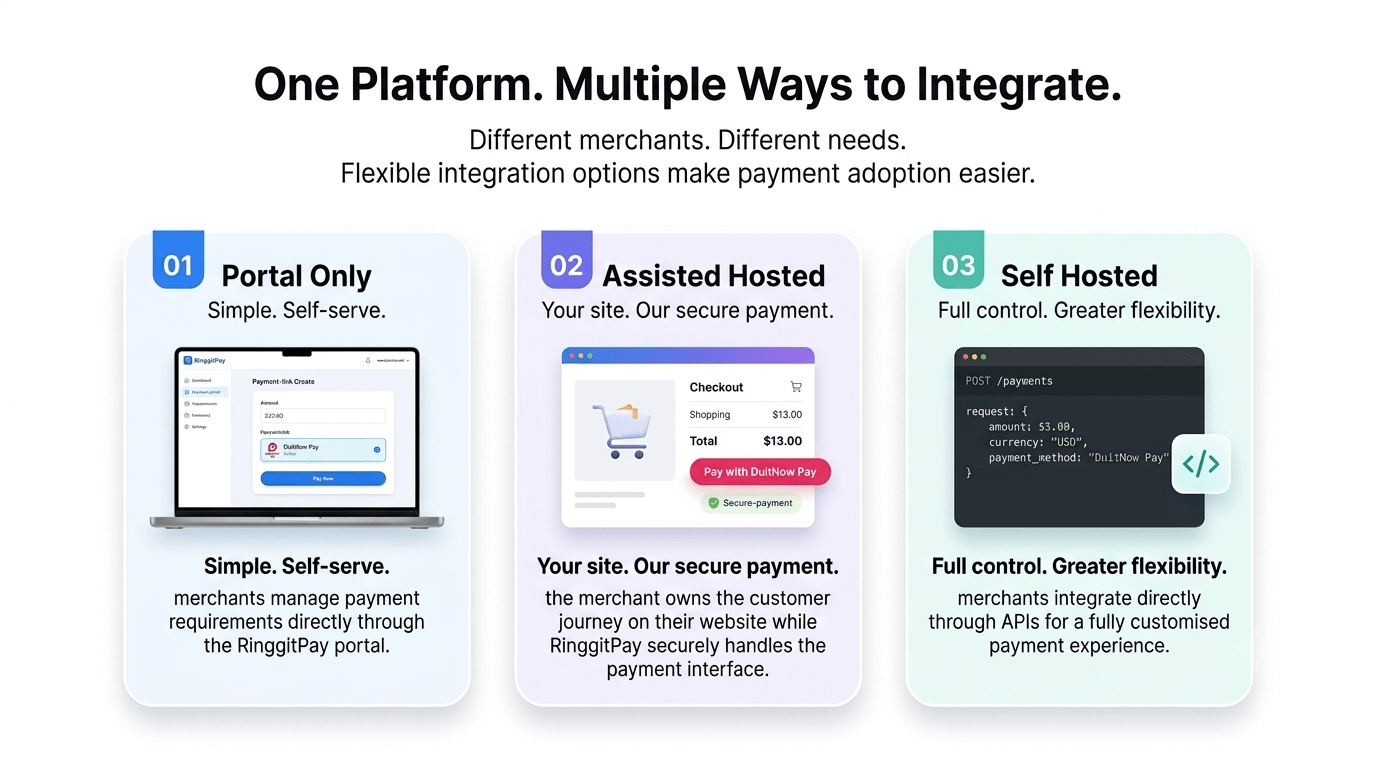
So RinggitPay supports multiple integration approaches:
Portal Only
Merchants can manage their payment requirements directly through the RinggitPay portal.
Assisted Hosted
The merchant manages the customer journey on its website, while RinggitPay handles the payment interface.
Self Hosted
Merchants integrate directly through RinggitPay simplified APIs for greater control over the payment experience.
White-labeled
RinggitPay can white-label Merchant and Backoffice portal to Bank branding and integration.
The Opportunity for Banks
The next phase of payments will not simply be about adding more payment methods.
It will be about connecting them efficiently and making them accessible to more businesses.
Banks already have strong merchant relationships.
The opportunity is to extend those relationships with payment infrastructure that makes adoption easier.
RinggitPay helps bridge that gap.
From payment integration and merchant onboarding to orchestration, testing and transaction management, it provides the technology layer between the bank, the payment ecosystem and the merchant.
DuitNow Pay is another payment capability.
RinggitPay is how banks can take that capability to their merchants.
Explore how RinggitPay can help your bank simplify payment integration, merchant onboarding, orchestration, testing and transaction management. All through a flexible technology layer built around your merchant ecosystem.